
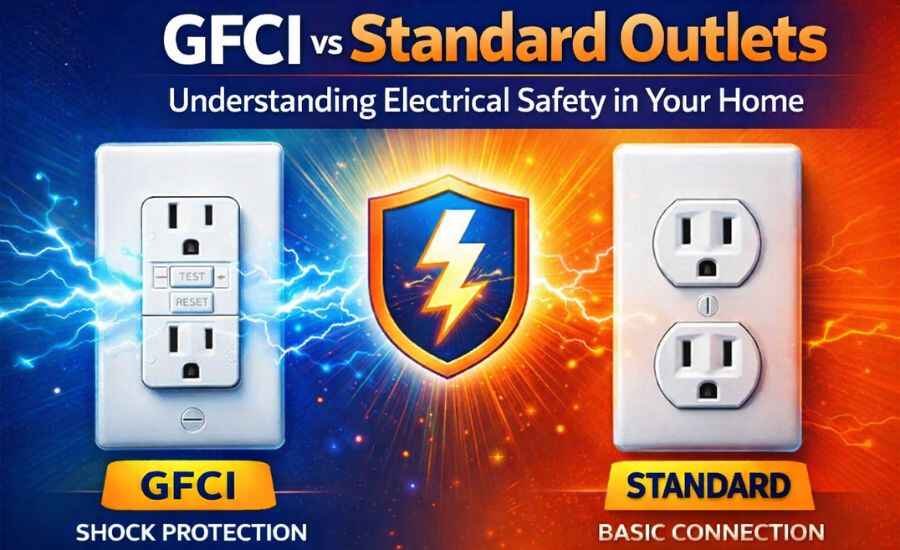
Understanding Electrical Safety in Your Home
When we talk about electrical safety, most homeowners don’t realize something crucial. The outlets in your walls serve different purposes. Some protect you from electrical hazards. Others are basic power suppliers. Knowing the difference matters for safety. Let’s dive into what separates them.
What Are GFCI Outlets and How Do They Work?
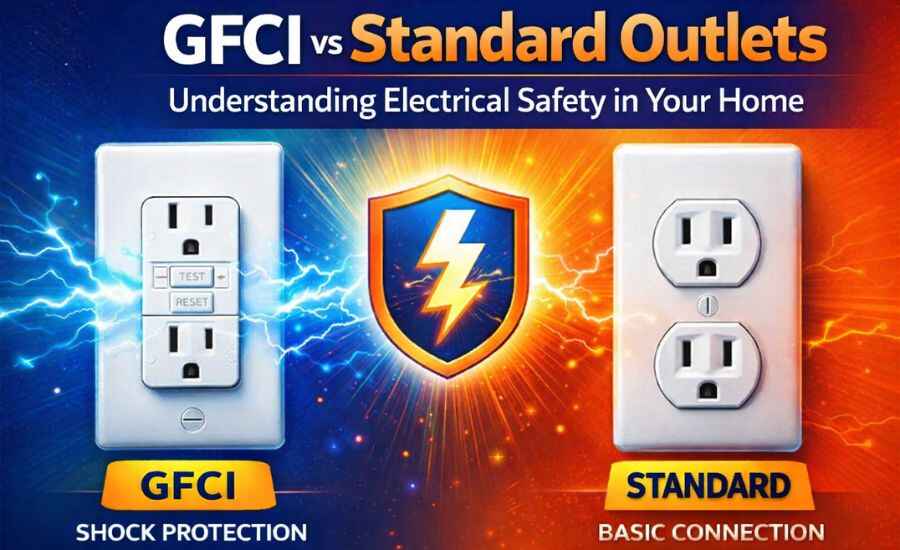
GFCI stands for Ground Fault Circuit Interrupter. These outlets detect electrical faults immediately. They shut down power in milliseconds. This prevents serious electric shocks. The National Electrical Code (NEC) requires them in wet areas. GFCI outlets contain special sensors. These sensors monitor electrical current flow. When an imbalance occurs, they react instantly.
The technology inside GFCI outlets is fascinating. A small transformer constantly compares the incoming current. It checks against the outgoing current in the circuit. Any mismatch triggers a shut-off mechanism. This happens faster than a heartbeat. Most models trip at 5 milliamps.
Where Do You Need GFCI Outlets?
Building codes mandate GFCI outlets in specific locations. Kitchens require them within six feet of sinks. Bathrooms need them near all water sources. Laundry rooms, basements, and garages demand protection. Outdoor outlets always require GFCI protection. Pools and hot tubs need specialized GFCI equipment. Wet areas carry the highest electrical risk.
The National Electrical Code outlines these requirements thoroughly. Homeowners often miss some critical locations. Crawl spaces sometimes need protection, too. Unfinished basements below grade require GFCI outlets. Any location prone to moisture needs them.
Standard Outlets: Basic Electrical Connectivity
Standard outlets, also called conventional outlets, simply provide power. They don’t monitor electrical current continuously. These are your basic two-pronged or three-pronged receptacles. They’ve been used for decades. Most homes still have numerous standard outlets. They work fine in dry interior spaces.
Standard outlets contain basic mechanical components. Contacts accept plugs and complete circuits. They don’t have safety monitoring systems. Overload protection comes from circuit breakers. Circuit breakers protect entire circuits, not individual outlets. This is a key distinction from GFCIs.
Standard outlets are less expensive than GFCI outlets. Installation costs remain lower as well. They’re adequate for living rooms and bedrooms. Dry spaces don’t require enhanced protection. This is why building codes permit them. Safety needs vary by location and purpose.
Key Differences Between GFCI and Standard Outlets
Feature | GFCI Outlets | Standard Outlets |
Electrical Current Monitoring | Continuous monitoring for imbalances | No monitoring system |
Shock Protection | Prevents shock in milliseconds | Relies on circuit breaker |
Wet Location Use | Required by code | Not permitted |
Cost per Unit | $15-$30 typically | $1-$5 typically |
Response Time | 5-8 milliseconds | Not applicable |
Testing Capability | Has test and reset buttons | No buttons |
Installation Location | Kitchens, bathrooms, outdoors | Dry interior spaces |
Protection Type | Personal protection device | Whole circuit protection |
The Protection Mechanism: How GFCI Outlets Save Lives
GFCI outlets operate on a simple principle. They compare the current entering the outlet. Then they compare the current leaving the outlet. When the current doesn’t match, a fault exists. Electricity is taking an unintended path. That path might be through you. The GFCI detects this immediately. It cuts power before serious injury occurs.
Standard outlets don’t have this capability. A circuit breaker works completely differently. It protects against overloads and short circuits. But it’s slow compared to GFCI. Breakers respond in seconds, not milliseconds. That delay is dangerously long for shock victims. GFCI outlets close this critical safety gap.
Think about what happens with drowning. Water conducts electricity very efficiently. Even small electrical leaks pose serious risks. A hair dryer falling into the bathtub water causes problems. Standard circuits might take seconds to respond. You could suffer severe burns or cardiac arrest. GFCI outlets eliminate this window of danger. They react faster than the human heart. Medical professionals confirm this saves lives daily.
GFCI Installation Service and Proper Placement
Professional GFCI installation service ensures code compliance always. Many homeowners try DIY installation themselves. This sometimes leads to improper placement issues. Electricians understand current flow and circuit protection. They know which outlets need GFCI protection. They understand outlet accessibility requirements, too.
Proper placement matters as much as installation. GFCI outlets shouldn’t be hidden behind furniture. They need accessible test and reset buttons. The electrical code requires accessible locations. Some jurisdictions require GFCI on entire circuits. Others allow individual outlet protection approaches. A licensed electrician knows local requirements. They ensure your installation meets every regulation.
Distance from water sources affects placement decisions. Kitchens typically have multiple GFCI outlets installed. Island counters might need their own protected circuit. Under-sink outlets always require GFCI protection. Outdoor outlets need weather-resistant GFCI protection. Some areas require all outdoor outlets as GFCI. The installation location determines your family’s safety level.
How GFCI Testing Works in Your Home
GFCI outlets have built-in test functionality conveniently. A test button intentionally creates an imbalance. Pressing it should immediately cut power. A reset button then restores the circuit. Monthly testing ensures your GFCI works properly. Many electricians recommend quarterly testing, actually. This simple maintenance prevents future safety issues.
If testing doesn’t work properly, replacement is needed. Faulty GFCI outlets don’t provide protection. They’re relatively inexpensive to replace. Testing takes only seconds but saves lives. Experts recommend testing after every season change. Your family’s safety depends on working GFCIs. Don’t ignore failed test results ever.
Common Mistakes Homeowners Make With Outlets
Many people install standard outlets in wet locations. This is a serious code violation. Building inspectors will require immediate corrections. Some homeowners daisy-chain GFCI outlets unnecessarily. This creates redundant protection and wasted resources. Understanding what you actually need matters. Others hide GFCI outlets behind cabinetry. This prevents testing and reset button access.
Improper wiring sometimes happens during DIY installation attempts. Line and load terminals get confused frequently. This affects how protection operates downstream. Professional electricians understand these technical requirements. They wired everything correctly according to code. They ensure protection works as intended. Hiring experts prevents expensive mistakes and dangers.
The Cost Factor: GFCI vs Standard Outlets
GFCI outlets cost significantly more than standard outlets. A single GFCI outlet might cost twenty dollars. Standard outlets often cost just a few dollars. However, GFCI protection is absolutely mandatory. The safety benefits far outweigh modest costs. Insurance companies prefer GFCI-protected homes clearly.
Installation labor costs depend on your location. Electricians typically charge hourly rates for installation. Converting bathrooms to GFCI might cost a hundred dollars. Upgrading kitchens costs more due to complexity. Outdoor installation often requires additional weatherproofing materials. Total project costs vary significantly by scope. Get multiple quotes before hiring electricians.
Modern GFCI Technology and Future Developments
GFCI technology continues to improve every single year. Newer models trip faster than older models. Some newer outlets offer arc-fault detection additionally. These protect against dangerous electrical fires, too. Smart GFCI outlets now connect to homes. They notify homeowners of electrical issues remotely. Technology keeps advancing electrical safety standards forward.
AFCI outlets (Arc Fault Circuit Interrupters) complement GFCIs perfectly. Many jurisdictions now require AFCI protection. They protect against fires caused by arcs. Combination GFCI-AFCI outlets handle both functions. Installation of these advanced outlets costs more. However, they provide comprehensive electrical protection. Consider upgrading to modern protection systems.
Building Code Requirements and Compliance
The National Electrical Code requires specific outlet installation. Jurisdictions enforce these codes strictly now. Kitchen outlets within six feet of the sink need GFCIs. All bathroom outlets require GFCI protection. Laundry room outlets must have GFCI protection. Crawlspace outlets and basement outlets need protection. Outdoor circuits require GFCI outlet installation. Check electrical code requirements in your area. Your local building department provides detailed specifications.
Electrical inspectors check compliance during renovations. Permits require final inspections before approval. Code violations can delay project completion significantly. Professional installation ensures first-time inspection approval. This saves time and money overall. Some insurance policies require GFCI compliance. Verify your homeowner’s insurance policy requirements.
Should You Upgrade to GFCI Protection?
If your home predates modern codes, upgrading makes sense. Older homes likely have inadequate protection. GFCI retrofitting improves safety considerably. Prioritize wet locations first, obviously. Then gradually upgrade the remaining circuit outlets. Your family’s safety justifies modest investment costs. Many electricians offer upgrade consultation services freely. They assess your current system thoroughly.
Selling your home becomes easier with GFCI outlets. Buyers appreciate modern safety features significantly. Home inspections often note missing GFCI outlets. Upgrading before selling adds property value. This investment returns substantially at the sale time. Insurance rates might decrease with proper protection. Discuss this with your insurance agent.
Professional Installation vs DIY Considerations
Hiring licensed electricians ensures proper installation always. They understand local electrical codes thoroughly. They have proper testing equipment available. They ensure correct wiring and placement. They provide warranties on their workmanship. DIY installation saves money but risks safety. Mistakes can create serious hazards.
The Electrical Safety Foundation strongly recommends professional installation. Improper installation negates GFCI protection benefits. One mistake can endanger your entire family. Professional work typically costs less than emergency work. Electrocution injuries require expensive medical treatment. Prevention through proper installation proves most economical. Don’t cut corners on family safety.
Conclusion
GFCI and standard outlets serve different purposes entirely. Standard outlets are adequate for dry areas. GFCI outlets are essential for wet locations. Your home’s safety depends on proper installation. Building codes exist because lives matter. Following these codes protects your entire family.
Schedule a professional electrical inspection today. Upgrade any missing GFCI protection immediately. Test existing GFCI outlets monthly. Replace any outlets that fail testing. Electrical safety shouldn’t be left to chance. Your family deserves complete protection always. Invest in proper GFCI outlet installation.

Author