Understanding Partial Power Outages and Their Serious Risks
A partial power outage occurs when only part of your home loses electricity. This situation differs significantly from a complete blackout affecting your entire house. Many homeowners don’t realize that partial power outages present unique dangers requiring immediate attention. Unlike full outage, a half-power outage creates an unstable electrical environment. This instability can damage expensive appliances and create fire hazards. The technical term for this phenomenon is also called a brownout or voltage fluctuation.
When only part of your house has power, something has gone seriously wrong upstream. Your local utility company maintains power distribution systems that serve neighborhoods. Sometimes these systems fail partially, leaving some areas unaffected. Other times, problems originate within your home’s electrical system itself. Understanding which scenario applies is crucial for your safety and wallet.
What Causes Half-Power Outage Situations
Several issues can trigger a partial power outage in your residential property. A failed neutral wire represents one of the most common causes. This single wire returns current from your home to the utility transformer. When it breaks, current tries to flow through unexpected paths. This creates dangerous voltage imbalances throughout your electrical system.
Service drop problems also cause partial outages frequently. Your service drop connects your house to the main power line. Wind, ice, or accidents can damage this critical connection point. When damaged partially, power reaches some circuits but not others. Your electrical panel receives uneven power from the distribution grid.
Transformer problems at the utility level cause widespread partial outages. A transformer converts electricity to safe voltages for homes. When one fails partially, multiple homes experience the same problem. Your local utility company needs to repair or replace this equipment.
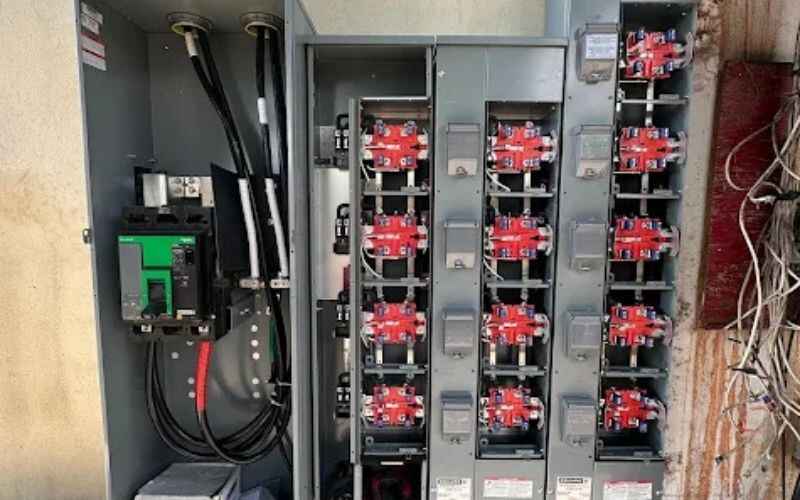
Circuit breaker issues within your electrical panel create localized problems. Individual circuit breakers protect specific areas of your home. A faulty breaker might not trip properly during surge conditions. This leaves appliances vulnerable to dangerous electrical damage.
Why Are the Lights Dim in Some Rooms During Power Problems
Flickering lights indicate serious electrical safety hazards in your home. Dimmed or flickering lights suggest voltage instability in your circuits. This happens because the current cannot flow normally through your wiring. The electrical system becomes stressed trying to maintain adequate power.
When the lights are dim in some rooms but not others, suspect problems. Your electrical outlets might work fine in one area. Yet outlets not working in another area confirm uneven power supply. This inconsistency points to something wrong in your power distribution chain.
One phase of power is out situations are especially dangerous for homeowners. Three-phase power serves most residential areas in North America. If one phase fails, two-thirds of your home still has electricity. You might mistakenly believe everything is working normally. However, two-thirds power creates impossible conditions for sensitive electronics.
Real Danger: Appliance Damage and Fire Risk
Appliances stopped working, indicating your home experienced significant power quality issues. Modern refrigerators, HVAC systems, and computers demand stable power delivery. When voltage fluctuates, these devices suffer internal component damage. A single power fluctuation can destroy expensive equipment permanently.
Power surge risk increases dramatically during partial power outages. When power returns after instability, dangerous surge protectors cannot protect everything. Your LED lighting, smart appliances, and surge protectors might all fail simultaneously. Replacing these items costs thousands of dollars.
A burning smell from an outlet demands immediate action from you. This smell indicates the outlet’s wiring insulation has overheated dangerously. Electrical faults produce heat that can ignite nearby materials. The fire risk from electrical faults increases significantly in this scenario. You should never ignore any burning smell from any outlet.
Circuit breakers serve as your home’s primary safety mechanism. A breaker didn’t trip when it should have is extremely concerning. This means the breaker failed to protect your home from dangerous conditions. You need a licensed electrician to inspect your electrical panel. A residential electrician possesses proper training for this inspection work.
Voltage Imbalance and Home Wiring Problems Explained
Voltage imbalance occurs when different parts of your home receive different voltages. The National Electrical Code establishes safe operating parameters for all homes. Your voltage should stay within 3 percent of 120 volts or 240 volts. When an imbalance develops, some circuits receive too much electricity.
High voltage damages motors and compressors in your refrigerator and HVAC system. These components cannot operate safely outside their designed voltage range. Extended operation under voltage imbalance causes permanent failure of internal parts. Your home wiring insulation degrades faster under these stressful conditions.
The grounding system and neutral wire work together to protect your home. Your electrical panel connects directly to your grounding system for safety. This system prevents dangerous voltage from building up in your outlets. When the neutral wire fails, your entire grounding system becomes compromised.
Home wiring problems develop gradually as your electrical system ages. Corroded connections inside your electrical panel reduce efficiency and safety. Your local utility company cannot fix problems inside your home. Only a qualified electrician can diagnose internal home wiring problems properly.
Recognizing Dangerous Symptoms and Warning Signs
One phase of power is out creates unusual electrical conditions. You might notice appliances stopped working in half of your home. Meanwhile, other areas operate completely normally. This pattern confirms one phase failure in your three-phase power system.
The breaker didn’t trip when you expected indicates a serious malfunction. Breakers should protect your circuits from overload automatically. When they fail, your circuits lose their most important safety feature. This situation requires professional inspection before restoring full power.
Power coming back unevenly after any interruption suggests lingering problems. Uneven power returns indicate utility company power distribution grid issues. Your home might recover some power before others. This uneven return pattern stresses every electrical component in your house.
When to Call an Electrician Immediately
Determining when to call an electrician prevents serious safety problems. Any burning smell from an outlet demands immediate professional assessment. Breaker didn’t trip when it should means calling today, not tomorrow. Voltage imbalance symptoms require testing with professional electrical equipment.
A licensed electrician brings specialized knowledge and diagnostic equipment to your home. They test voltage stability using calibrated meters and advanced testing devices. They inspect your electrical panel, neutral wire, and all connections carefully. They examine your service drop and other external electrical infrastructure.
Appliance damage from power loss might need professional repair or replacement. Your residential electrician can help determine what damaged your appliances. They can recommend surge protection solutions for future power stability. Professional grounding system inspection ensures your home’s protection system works.
Is it safe to stay in the house during partial outages? Only if the problem originates outside your home’s electrical system. If problems exist inside your home, you face electrical safety hazards. You should leave your home if you suspect internal electrical faults. Move to another location until a professional inspects everything thoroughly.
Understanding the Broader Electrical System Context
Your service drop connects your home to the main power line above. Ice, wind, and accidents damage service drops frequently. Utility companies prioritize repairing service drop problems for widespread outages. However, individual service drop damage might affect only your home.
The transformer steps down high-voltage power to safe household levels. Transformer problems affect entire neighborhoods when they occur. Your local utility company responds quickly to transformer failures. Sometimes transformers fail partially, creating the conditions for partial outages.
The power distribution grid maintains delivery of electricity throughout your region. Utility power issues can originate from damaged lines, downed trees, or equipment failure. Weather events frequently impact the entire power distribution grid. Partial failures in this system create the dangerous conditions you experience.
Preventing Future Problems and Protecting Your Home
Surge protector devices offer limited protection during voltage imbalance conditions. Multiple surge protectors throughout your home provide better protection overall. Professional surge suppression systems offer superior protection for your appliances. Your electrical panel can have whole-house protection installed.
LED lighting tolerates power fluctuations better than older incandescent bulbs. Modern smart appliances include built-in protection against voltage problems. However, motor and compressor devices remain vulnerable to power quality issues. HVAC systems and refrigerators need dedicated protection strategies.
Should I turn off appliances during partial power outages? Yes, absolutely. Turning off appliances prevents damage from unstable voltage conditions. Turn off your HVAC system, refrigerator, and smart appliances manually. Wait for stable power to return before turning everything back on.
Regular electrical safety standards require professional inspections of residential electrical systems. The National Electrical Code establishes minimum safety requirements for all homes. Most homes built decades ago don’t meet current safety standards. Consulting electrical safety standards helps you understand your home’s risks.
Final Thoughts on Partial Power Outage Safety
Partial power outages deserve serious attention from every homeowner. The risks of fire, appliance damage, and safety hazards are real. Unusual electrical symptoms should never be ignored or dismissed. Contact your local utility company about neighborhood power issues.
If problems persist after utility repairs, hire a licensed electrician. Professional diagnosis prevents future electrical emergencies in your home. Your family’s safety depends on maintaining a properly functioning electrical system. Taking action today prevents much larger problems tomorrow.
When partial power outages strike, Solid Power Inc. provides expert solutions. Our licensed electricians diagnose and repair complex electrical problems quickly. Contact Solid Power Inc. today for immediate assistance protecting your home.
Frequently Asked Questions
Can a partial power outage damage my expensive appliances permanently?
Yes, voltage fluctuations destroy refrigerators, HVAC systems, and computers easily. One voltage spike can destroy internal components beyond any repair.
How do I know if one phase of power is out in my home?
Lights are dim in some rooms while others remain bright. Outlets not working in half of your home indicates one phase failure.
What should I do if I smell burning from an electrical outlet?
Leave your home immediately and call emergency services right away. Do not touch the outlet because fire risk is imminent.
Is it safe to stay in the house during a partial power outage?
Only if the problem originates outside your home’s electrical system. Internal electrical faults make staying unsafe, so leave immediately.
Why didn’t my circuit breaker trip when the power fluctuated?
A breaker that didn’t trip indicates the breaker itself has completely failed. Your electrical panel needs professional inspection by a licensed electrician.