I have been working as a licensed electrician for over 15 years. I have seen house fires that started from a single overloaded outlet. I have walked into homes with wiring so dangerous it shocked me literally. Most of these disasters were completely preventable. This guide covers everything you need to protect your home and family from electrical hazards.
Whether you are a new homeowner or have lived in your house for decades, these tips apply to you. The U.S. Consumer Product Safety Commission reports that 31,000 home electrical fires happen every year. That number should scare you into action.
What Causes Electrical Fires in Homes?
Most people assume electrical fires come from dramatic events. In reality, they start small and quietly. The National Fire Protection Association (NFPA) confirms that faulty wiring causes about 69% of all electrical fires. The other causes include damaged cords, overloaded outlets, and improper appliance use. Knowing the root causes is the first step toward preventing them.
From my experience in the field, old aluminum wiring and outdated electrical panels are the biggest culprits. Homes built before 1980 are especially at risk. If your home has a Federal Pacific panel or knob-and-tube wiring, call a licensed electrician immediately.
12 Home Electrical Safety Tips From a Licensed Electrician
1. Always Read Appliance Instructions First
This sounds obvious, but most homeowners skip the manual entirely. Appliance manufacturers include safety warnings for a real reason. If any appliance gives you even a slight tingle or shock, stop using it right away. Have a qualified electrician inspect it before plugging it back in.
2. Never Overload Your Electrical Outlets
Overloaded outlets are one of the most common causes I find during home inspections. Each outlet has a load limit that your home’s wiring is designed to handle. Exceeding that limit causes heat buildup inside your walls. You cannot see it happening, but your house can start smoldering from inside.
Follow these outlet safety rules:
Plug only one heat-producing appliance per outlet at a time. Never use extension cords as a permanent solution for appliances. Power strips add outlets but do not increase the circuit’s power capacity. If outlets feel warm to the touch, call an electrician immediately. Smart plugs can monitor power loads and prevent overheating automatically.
For professional electrical outlet inspection in your area, check the Electrical Safety Foundation International (ESFI) for certified contractor resources.
3. Inspect and Replace Damaged Electrical Cords
I cannot stress this enough. Frayed, cracked, or pinched cords are silent killers. I have seen houses catch fire from cords running under area rugs. Furniture sitting on a cord slowly crushes the insulation and creates a fire risk you cannot see. Check every power cord in your home at least twice a year. Replace anything that looks worn without hesitation.
When choosing extension cords, match the gauge to the load:
A 16 AWG cord handles loads up to 1,375 watts safely. For heavier appliances, choose a 14 AWG or 12 AWG cord. The lower the AWG number, the thicker and more capable the cord.
Also related: check out our guide on [how to prevent electrical hazards at home] for a deeper look at cord management best practices.
4. Store Cords Properly When Not in Use
Cord storage matters as much as cord use. Keep unused cords away from pets and small children who may chew them. Never wrap cords tightly around objects because this causes internal wire damage over time. Never drape a cord over a hot surface or near a heat source like a radiator. Damaged insulation from heat exposure is invisible but extremely dangerous.
5. Unplug Appliances When You Are Not Using Them
Unplugging unused appliances eliminates phantom power drain and reduces fire risk. Even when turned off, many appliances draw power continuously. A coffee maker, phone charger, or toaster sitting plugged in for years can overheat internally. Smart plugs with scheduled shutoff timers make this habit much easier to maintain.
6. Keep Electricity and Water Completely Separated
In 15 years on the job, water near electrical outlets has caused some of the worst injuries I have witnessed. Bathrooms, kitchens, laundry rooms, and outdoor areas must have Ground Fault Circuit Interrupter (GFCI) outlets installed. These outlets detect current leakage and shut off power within milliseconds to prevent shock. Always keep electrical equipment dry. Never operate appliances with wet hands. Keep outlets covered near sinks, bathtubs, and aquariums at all times.
7. Give Your Appliances Room to Breathe
Appliances need airflow to prevent overheating. Stuffing electronics into closed cabinets or tight spaces is a mistake I see constantly. Your dryer, in particular, must sit at least one foot away from the wall. Restricted airflow causes motor overheating, which leads to fires. Keep all flammable materials stored well away from heat-producing appliances.
8. Clean Exhaust Fans Regularly
Dirty exhaust fans in bathrooms and kitchens make appliances work harder than they should. The extra strain generates excess heat and can cause dangerous gas buildup in enclosed spaces. Clean exhaust fans every three to six months. This simple habit extends appliance life and significantly reduces fire risk.
9. Use the Correct Wattage in Every Fixture
This is a mistake I see in almost every home I inspect. Using a 100-watt bulb in a fixture rated for 60 watts creates a serious overheating hazard. If a fixture has no wattage label, never exceed 60 watts. For unlabeled ceiling fixtures, stick to 25-watt bulbs. Switching to LED bulbs solves this problem entirely. LEDs consume dramatically less power and produce far less heat than incandescent or CFL bulbs.
10. Keep Heaters Away From Flammable Materials
Space heaters cause thousands of residential fires every year. I always tell my clients to treat portable heaters like they are an open flame. Keep heaters at least three feet away from curtains, bedding, furniture, and rugs. Only place them on stable, flat surfaces to prevent tipping. For built-in furnaces, store all combustible materials well away from vents and heating elements.
Also, check your water heater temperature. Most manufacturers recommend 120 degrees Fahrenheit. Higher temperatures increase scalding risk, especially for children and elderly residents.
11. Install Arc-Fault Circuit Interrupters (AFCIs) in Your Home
Most homeowners know about GFCIs but have never heard of AFCIs. Arc-fault circuit interrupters detect dangerous electrical arcing that standard breakers miss entirely. Arcing is the leading cause of home electrical fires in the United States. The National Electrical Code (NEC) now requires AFCI protection in most rooms of new construction. If your home is older, have a licensed electrician install AFCIs in bedrooms, living areas, and hallways.
12. Know Your Electrical Panel and Breaker Box
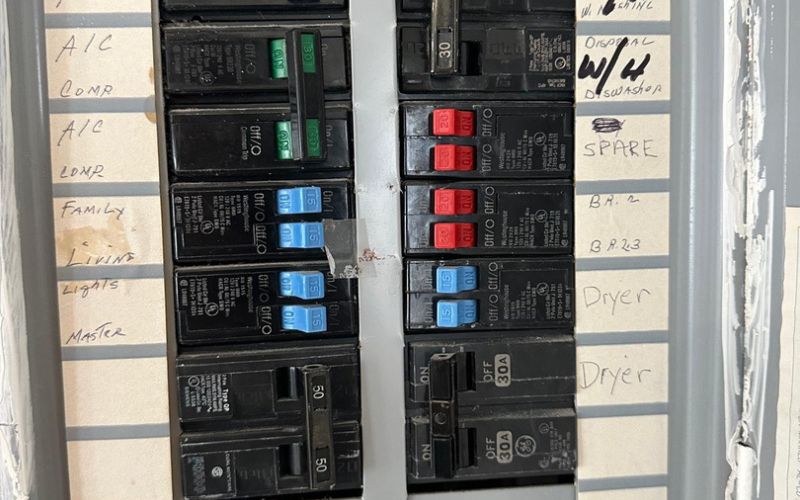
Every homeowner should know exactly where their main electrical panel is located. Label every single circuit clearly so you can shut off power quickly in an emergency. If breakers trip frequently, that is not a normal quirk; it is a warning sign of an overloaded circuit or faulty wiring. Call a licensed electrician to diagnose the problem before it becomes a fire.
Warning Signs Your Home Has Electrical Problems
After more than a decade in this industry, I can tell you that homes almost always give warning signs before a serious electrical failure. Watch for these red flags:
Outlets that feel warm or hot to the touch signal an immediate problem. Flickering or dimming lights that happen randomly indicate wiring issues. A burning smell near any outlet or appliance means disconnect and call immediately. Frequently tripping circuit breakers means circuits are being overloaded regularly. A buzzing or crackling sound from outlets or the electrical panel is a serious emergency.
Never ignore these warning signs. Delaying a call to a licensed electrician over symptoms like these is how house fires start.
When to Call a Licensed Electrician Immediately
Some situations cannot wait. Call a licensed electrician right away if you experience any of the following:
Burning smells with no obvious source anywhere in your home. An outlet or switch that sparks when a plug is inserted or removed. Any sign of scorch marks around outlets, switches, or the panel. Visible damage to wiring in your attic, basement, or crawl space. Your circuit breaker trips every time a specific appliance is used.
These are not inconveniences. These are emergencies that can turn into a house fire within hours.
Expert Electrical Care in Hialeah by Solid Power Inc.
Solid Power Inc. is your trusted residential electrician in Hialeah, FL, committed to keeping homes safe and efficient with expert electrical care. We are a reliable residential electrician offering practical Safe Electrical Wiring Tips for Homeowners to prevent hazards and ensure long-term safety. We specialize in Electric Panel Upgrade services that improve power distribution and support modern home energy needs. Our Residential Lighting Services bring comfort, style, and energy efficiency to every space. With experienced technicians, we focus on quality workmanship, safety, and customer satisfaction in every project we handle. Choose us for dependable service and lasting electrical solutions every time.
Frequently Asked Questions
How often should I have my home’s electrical system inspected?
I recommend a professional electrical inspection every three to five years for most homes. Older homes built before 1980, or homes with aluminum wiring or outdated panels, should be inspected every one to two years. After major renovations or if you notice any warning signs, book an inspection immediately without waiting for the regular schedule.
Are power strips safe to use long-term?
Power strips are safe for low-draw devices like lamps and electronics. They are not safe for high-draw appliances like refrigerators, microwaves, or space heaters. Power strips add outlet capacity but do not increase the power your circuit can handle. Overloading a power strip is one of the most common causes of electrical fires I see in homes.
What is the difference between a GFCI and an AFCI outlet?
A GFCI (Ground Fault Circuit Interrupter) protects against electrical shock by detecting current leaking to ground. It is required in wet areas like kitchens, bathrooms, and garages. An AFCI (Arc Fault Circuit Interrupter) protects against electrical fires by detecting dangerous arcing in circuits. Both types serve different safety functions and both are required by modern electrical codes in specific locations throughout your home.
Is it safe to use extension cords permanently?
No. Extension cords are designed for temporary, occasional use only. Using them permanently means your home does not have enough outlets to meet your needs. The solution is to have a licensed electrician install additional outlets in the areas where you routinely rely on extension cords. Running extension cords under rugs or through walls is especially dangerous and a code violation in most jurisdictions.
How can I tell if my home has outdated or dangerous wiring?
Signs of outdated wiring include two-prong ungrounded outlets throughout the home, cloth-wrapped wiring visible in the attic or basement, a Federal Pacific or Zinsco electrical panel, and aluminum branch circuit wiring in homes built between 1965 and 1973. If your home has any of these features, schedule an inspection with a licensed electrician as soon as possible. These are known fire hazards that require professional evaluation and likely upgrading.
Can I replace an electrical outlet myself?
While some basic outlet swaps are within reach for experienced DIYers, I strongly advise against it unless you have verified electrical training. Incorrectly wired outlets can cause shock, short circuits, and fires that may not appear for months. Any work involving your electrical panel, new circuits, or upgraded wiring must be done by a licensed electrician and permitted through your local building department. The savings from a DIY job are never worth the risk.
